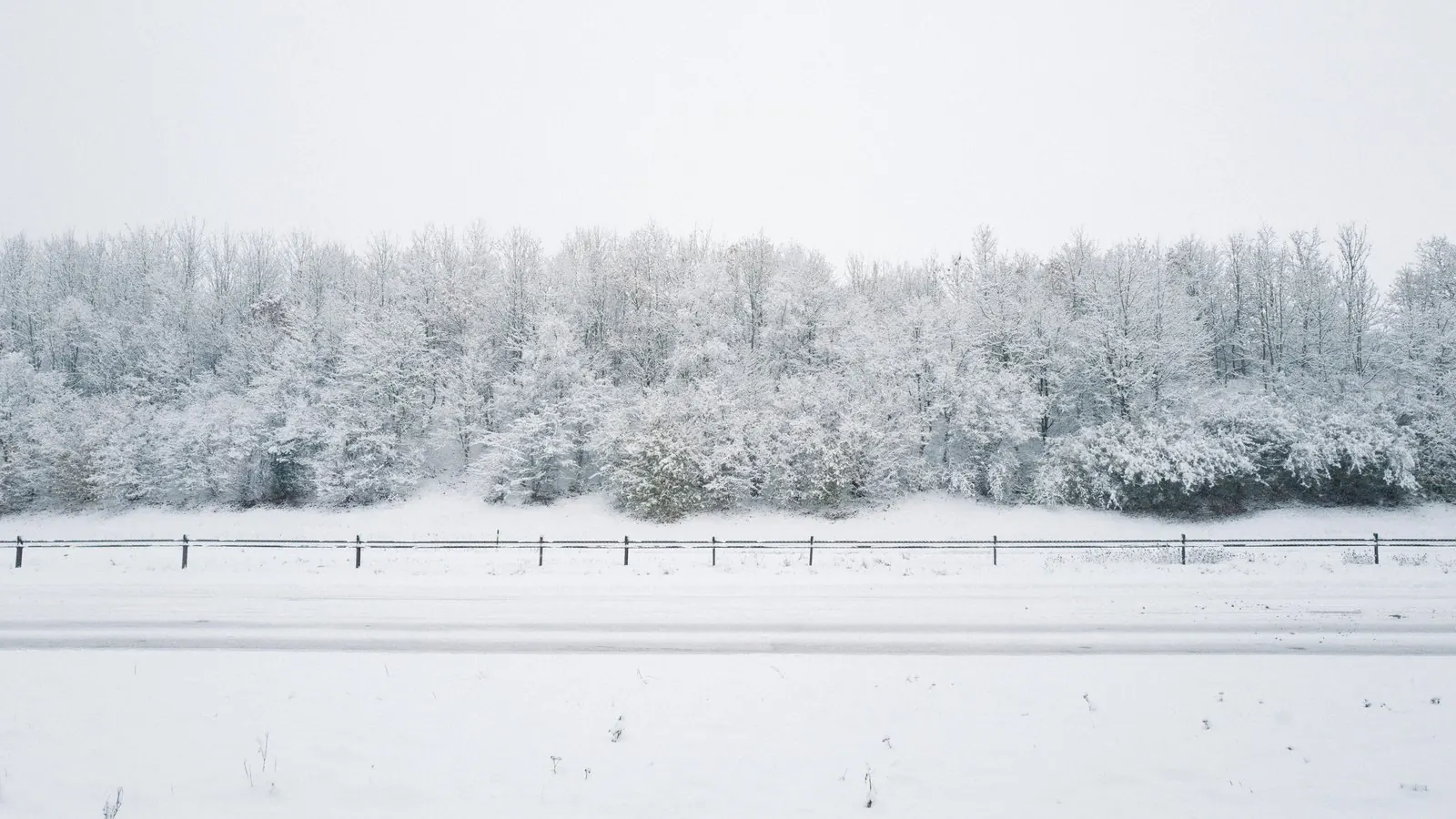
Canada is a winter country, and most of its population lives in places where the ground freezes solid for several months a year. For families considering green burial, this raises an obvious practical question: what happens if death comes in December?
The Frozen Ground Problem
Conventional cemeteries handle winter burial in a few ways. Some use heavy machinery and ground heaters to thaw the soil. Some hold bodies in a winter vault — a small building where caskets wait until spring. Some simply refuse winter burials in remote sections. The consequences can be severe for families set on natural burial: reporting from Haliburton County documented townships prohibiting winter burial outright, with the only available storage requiring the embalming that green burial rules out.
Green burial sites face additional complications. Direct earth burial in a shroud is harder to perform in frozen ground. Many natural burial grounds are in less-developed sections of cemeteries without the equipment access that conventional sections have.
What's Actually Possible
The answer varies considerably by site. Some Canadian green burial sites are equipped to do winter burials year-round. Others pause from late November through April. Still others will do winter burials only in specific weather conditions.
The only way to know is to ask. Specifically:
- Do you perform burials year-round, or do you pause during winter?
- If you pause, when does that begin and end?
- If a death occurs during the closed period, what happens?
- Are additional fees charged for winter burials?
Body Storage During the Gap
If a green burial cemetery closes for winter, the body must be stored somewhere until spring. This is typically handled by the funeral home using refrigeration. Some funeral homes have limited capacity for extended storage; others can hold a body for several months without difficulty.
If extended storage is likely, discuss it explicitly with the funeral home in advance. Confirm costs, location, and any practical limits.
The Ontario Story
Eastern Ontario in particular has historically struggled with winter green burial access, and cost pressures compound the problem — the Natural Burial Association has been vocal about how Ontario's fee structure affects families choosing natural burial. (For the wider provincial picture, see our complete guide to green burial in Ontario.) For years, families in the Ottawa Valley and beyond had to choose between unwanted compromises: conventional cremation, conventional burial, or transporting a body hundreds of kilometres to a site that might still be closed.
Things are improving. New green burial sections in Hamilton, Kitchener, and the Ottawa Valley itself are expanding year-round options. Beechwood's planned green burial ground in Ottawa will be a particularly significant step for the region.
Planning Ahead
If you're preplanning or have a family member with a serious illness, winter readiness is worth building into your thinking. Confirm whether your chosen site operates year-round. Ask specifically about their process for winter burial — equipment, timing, additional fees. Understand body storage options if a gap between death and burial is unavoidable.
Winter comes reliably in Canada. The best time to have this conversation is well before it does.
Find a green burial site that operates in your season.
View the Directory →